Start with the model the reports need
Moving a SQL Server warehouse to Fabric raised a modelling question: which parts of the existing design should carry forward?
Copying the tables would also copy old assumptions. The work centred on reviewed facts, dimensions and business definitions, with source evidence behind the redesign.
 Microsoft Fabric
Let the data inform the proposal
SQL Server metadata described the structures. Profiling examined keys, missing values and record behaviour, giving the modelling system evidence to work from.
That evidence informed AI-assisted proposals for facts, dimensions and Silver and Gold structures. A proposed model still needed an accountable review before adoption.
Keep reporting meaning in human hands
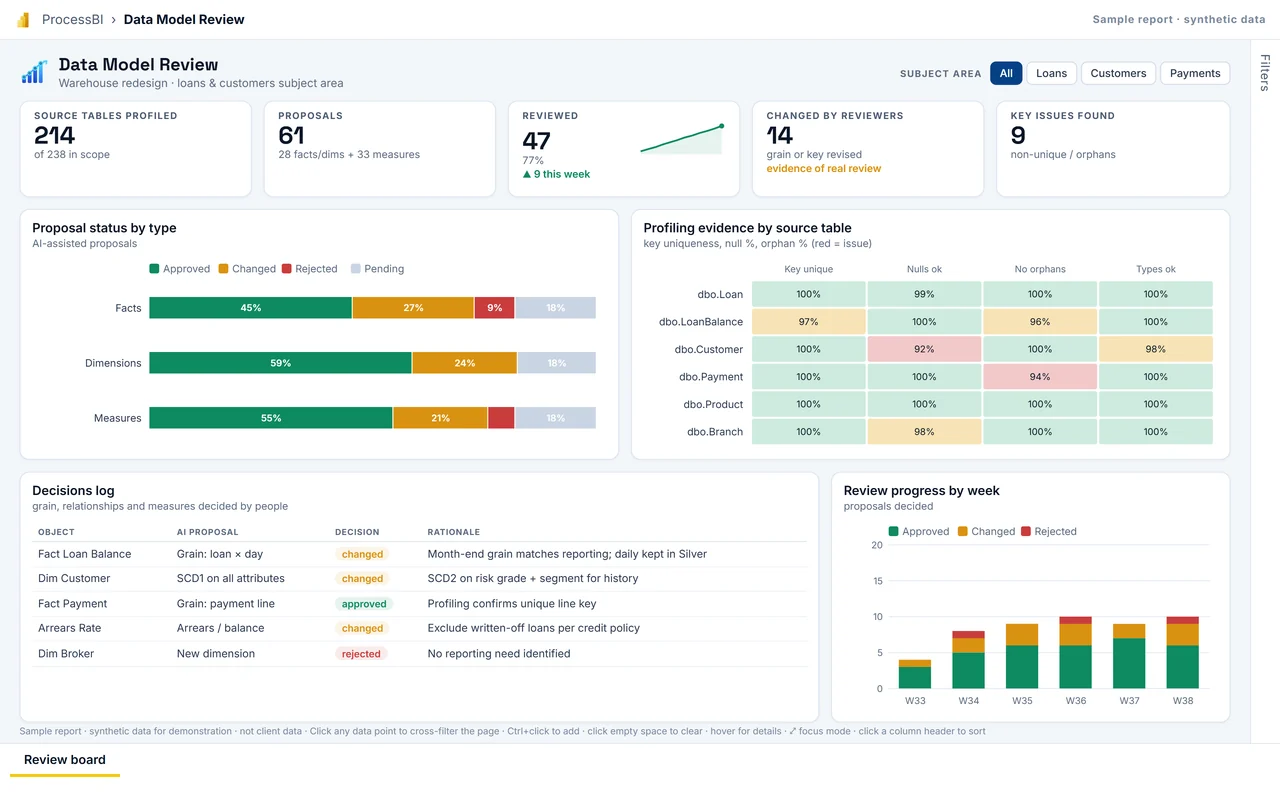
Human review determined the grain, relationships and measures before adoption. Those decisions tied the model to reporting needs, rather than simply reproducing the source tables.
The Fabric foundation combined the warehouse redesign with accountable definitions. Silver and Gold structures supported the model; reporting definitions and ontology made its business meaning explicit.
Our methodology
- 01DiscoverAgree the outcome, the decisions and the requirements.
- 02Current stateMap how the work and data flow today, with evidence.
- 03Root causesFind what drives the delay, rework or disagreeing numbers.
- 04ApproachAgree the target design, scope and measures of success.
- 05BuildBuild the process change, model or report the design calls for.
- 06OptimiseTest at real volumes; tune speed, cost and usability.
- 07ProductioniseRelease with managed deployment, monitoring and support.
- 08GovernSet owners, access and controls so it keeps working.

Steps in this diagram
Lanes: Notebooks (automated), AI model, Data architect, Business reviewer.
- Reporting needs agreed
- Scan metadata + profile data
- Propose facts, dims, measures
- Check against evidence
- Decide grain, relationships, measures
- Accepted?
- Revise proposal
- Build Silver / Gold
- Definitions published

Components in this design
- SQL Server (legacy warehouse)
- Metadata scan (schemas, keys, FKs)
- Data profiling (uniqueness, nulls, orphans)
- AI proposal (facts, dims, Silver/Gold)
- Evidence store (profiles + proposals)
- Pull request review (grain, relationships, measures)
- Review board (sample report on this page)
- Mirror / copy (Bronze landing)
- Silver + Gold (reviewed model)
- Semantic model (definitions + ontology)
Reference design: how this pattern is typically built on Microsoft services. Component choices for a specific engagement depend on the client's environment and existing licences.
Microsoft icons are used under Microsoft's terms. Icon notices
Synthetic sample data, not client data.
Legacy licence cost avoided
Reported saving
Saving amount · AUD · axis starts at zero
Approximately AUD 40,000 reported legacy licence cost avoided. Period not stated by the client.
Rebuilding a data model for Fabric?
Tell us what is happening. We agree priorities and scope before proposing any work.